Quick Guide
You're probably here because you typed "Is Tahiti a country" into Google. Maybe you're planning a dream vacation and got confused about visa requirements. Or perhaps you heard someone call it a country and it just didn't sound right. I get it. I was in the same boat a few years ago before my first trip to the South Pacific. The short, clear, no-nonsense answer is no, Tahiti is not a sovereign country. Not even close, in the political sense.
But if the answer is so simple, why does the question pop up so often? That's the interesting part. The confusion is totally understandable, and it stems from a mix of geography, history, and how destinations are marketed to tourists. Tahiti has this powerful, almost mythical brand that makes it feel like its own separate world. Travel brochures sell the idea of an exotic, faraway paradise, which it absolutely is, but they rarely lead with "part of France." So your brain starts to wonder, "Is Tahiti a country on its own?" It's a natural assumption to make.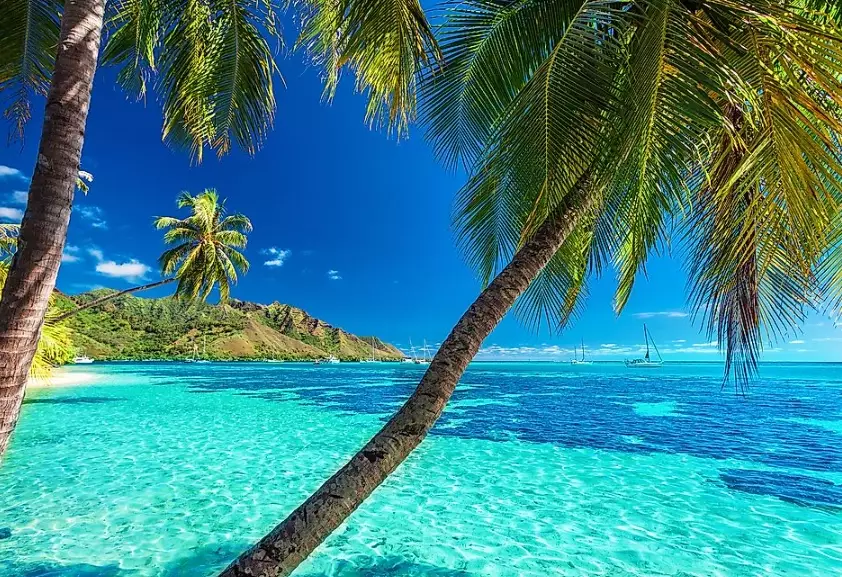
Quick Reality Check: If you need a passport to visit, you'll be using your passport to enter French territory. Your phone might switch to a French roaming network. And the currency you'll spend is the Euro, not some Tahitian dollar. Those are pretty big clues.
What Is Tahiti, Actually? Breaking Down the Political Jargon
Okay, so it's not a country. What is it then? To really grasp the status of Tahiti, you need to understand the entity it belongs to: French Polynesia.
French Polynesia is a French overseas collectivity with a special status of "overseas country." It's a collection of 118 islands and atolls scattered across an area of the Pacific Ocean as big as Europe. Tahiti is the economic, political, and administrative hub. The capital, Papeete, is on Tahiti. The local government of French Polynesia has its own president, assembly, and significant control over local matters like tourism, health, and primary education. This level of self-governance is probably a key source of the "is Tahiti a country" confusion.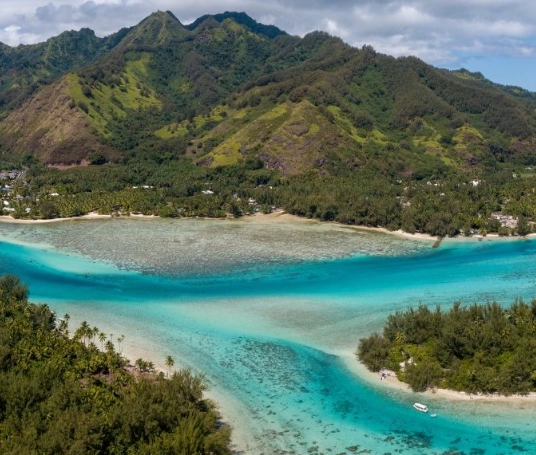
Think of it like this: Imagine a large company (France) with a highly specialized, semi-independent division (French Polynesia) located far from headquarters. The division has its own manager, budget, and can make most day-to-day operational decisions. But it still follows the overall corporate rules, uses the company's name, and the CEO in headquarters has the final say on major strategic directions like international mergers (foreign policy) and overall security. Tahiti is the main office building of that far-away division.
This setup means that for a visitor, you'll see a blend of French and Polynesian influences everywhere. You'll find fresh baguettes next to poisson cru (a local raw fish dish). You'll hear Tahitian spoken in the markets and perfect French in government offices. The police cars say "Police Nationale" – that's the French national police.
To make this distinction crystal clear, let's look at the key differences between what makes a sovereign country and what defines Tahiti's status.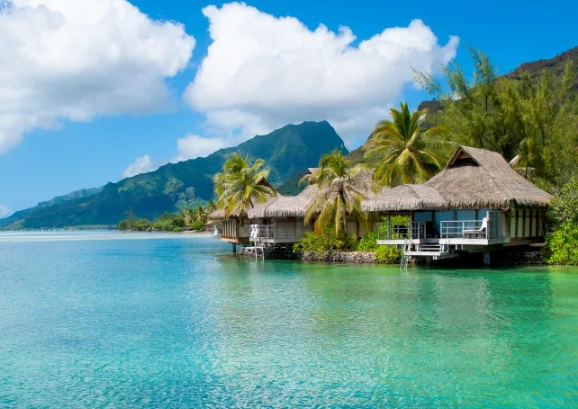
| Feature | Sovereign Country | Tahiti (as part of French Polynesia) |
|---|---|---|
| Independent Governance | Has full, ultimate authority over its own laws and governance. | Has autonomy in local affairs, but France controls defense, foreign policy, justice, and currency. |
| International Recognition | Recognized by other sovereign states and the UN. | Not a UN member state. Represented internationally by France. |
| Military & Defense | Maintains its own military or defense agreements. | Defended by the French Armed Forces (there's a French military base on Tahiti). |
| Currency | Issues its own currency or has a formal monetary agreement. | Uses the Euro (€) as official currency. |
| Head of State | Its own President, King, or equivalent. | The President of France is the head of state. French Polynesia has its own local President for internal governance. |
| Passport & Citizenship | Issues its own passports. Defines its own citizenship. | Citizens are French citizens. They carry French (EU) passports. |
Looking at that table, it's pretty definitive. The question "is Tahiti a country" can be confidently answered by looking at who controls the big-ticket items like defense and money. France does.
Why the Confusion? History, Tourism, and Simple Geography
I don't blame anyone for asking if Tahiti is a country. The mix-up comes from a few really compelling places.
First, there's distance and isolation. Tahiti is about as far from France as you can get—roughly 15,700 kilometers (9,800 miles). It feels like its own world, because geographically, it is. When you're surrounded by the vast Pacific, with a culture and environment so distinct from Europe, the connection to a European power can feel abstract, almost theoretical.
Then there's history. Before the French established a protectorate in the 1840s, the Tahitian islands were ruled by their own Polynesian monarchs, the Pomare dynasty. There was a distinct Kingdom of Tahiti. That sense of a lost independent kingdom still lingers in the cultural memory and is a point of reference for some. So historically, the idea of Tahiti as its own political entity isn't a modern invention; it's a remembered past.
But the biggest culprit today is probably tourism marketing. Go to any travel site or brochure. You'll see "Tahiti" or "Bora Bora" sold as dream destinations, often with little immediate mention of France. The brand is built on exoticism, romance, and escape. "French Polynesia" is used, but "Tahiti" is the star. This branding is incredibly successful, but it inadvertently decouples the destination from its political reality in the traveler's mind. You're sold on a paradise island, not a territorial subdivision of a European republic. It's marketing 101, but it directly fuels the "is Tahiti a country" search query.
I remember telling a friend I was going to French Polynesia. They looked blank. I said, "Tahiti." Their eyes lit up. "Oh! Tahiti! That's a country, right?" See what I mean?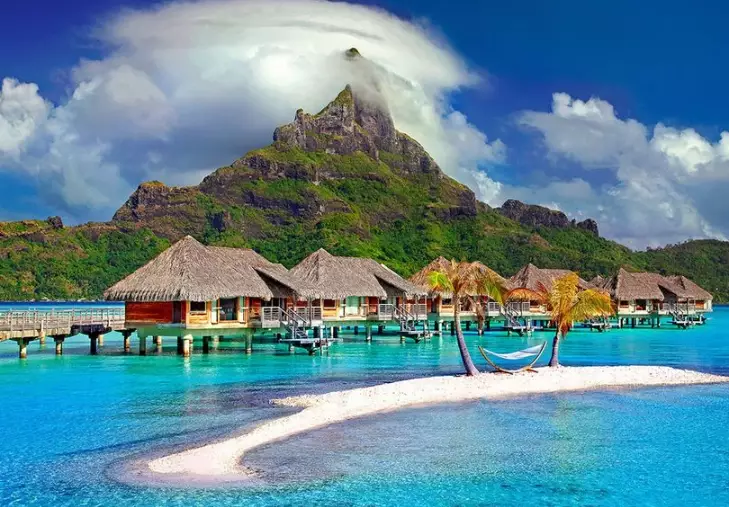
What This Means For You: Travel, Culture, and Practicalities
So, why does this political status even matter to you, especially if you're just looking for a beautiful beach? It matters more than you might think for practical planning and cultural understanding.
For Travelers: Visas, Money, and Phones
Since it's French territory, the entry rules for French Polynesia are the same as for France for many nationalities. If you're from the US, Canada, UK, Australia, etc., you can enter visa-free for short stays (usually up to 90 days). You need a passport valid for at least three months beyond your departure date. But crucially, you're entering a French territory. For citizens of countries that need a Schengen visa for mainland Europe, they will typically need a specific visa for French Polynesia, though it's not the Schengen visa. Always double-check with official sources like the French Ministry for Europe and Foreign Affairs or the Tahiti Tourisme official site.
Currency is the Euro. You might see some older guidebooks mentioning the French Pacific Franc (CFP franc or XPF). That was the old currency. As of 2023, the Euro is the sole official currency. This simplifies things massively—no need for extra currency exchanges if you're coming from Europe.
For the Culturally Curious: Identity and Language
The political reality creates a fascinating cultural duality. People in Tahiti are proudly Polynesian and proudly French. They are French citizens with full EU rights. They can vote in French elections, and they elect representatives to the French National Assembly and Senate in Paris. At the same time, there's a strong movement to preserve and revitalize the Tahitian language (Reo Tahiti) and indigenous culture, which was suppressed for periods in the past.
You'll see the French tricolor flag flying, but you'll also see the flag of French Polynesia (red and white horizontal bands with a Polynesian canoe and sun emblem) everywhere. The local political scene often debates the spectrum of autonomy, from those content with the current status to those advocating for full independence. It's a living, evolving political landscape, not a frozen postcard.
This is why understanding that Tahiti is not a country, but a part of something larger with a complex relationship with France, gives you a much richer lens through which to see the place. You're not just visiting a resort island; you're visiting a unique crossroads of Polynesian heritage and European connection.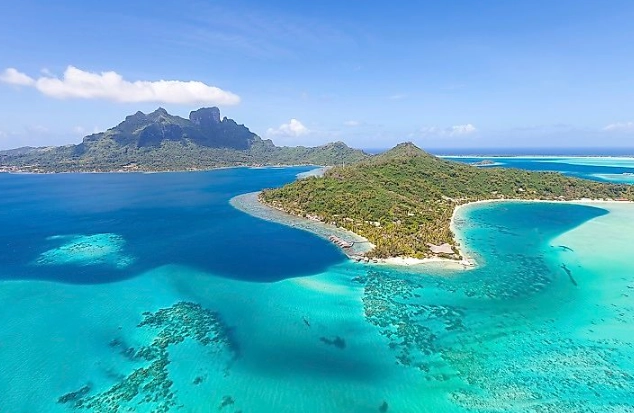
Common Questions People Ask (The FAQ We All Need)
Bottom Line for Travel Planning: When researching, booking, or preparing for your trip, always frame it as a trip to French Polynesia. That's the correct entity for visa info, official travel advisories (check your country's advice for France/French Polynesia), and understanding the legal and practical framework. The island you fly into and likely spend your first or last night on is Tahiti.
Final Thoughts: Beyond the Simple Yes or No
Answering "is Tahiti a country" with a firm "no" is correct, but it feels a bit incomplete. It's like answering "is New York City a country?" with a "no" and leaving it at that. You've missed the essence.
Tahiti is the beating heart of a vast, unique French overseas territory with a special status. It's a place where Polynesian navigators settled millennia ago, where European explorers arrived with dramatic consequences, and where a distinct modern identity has been forged. Its political connection to France provides stability, infrastructure, and EU citizenship for its people. Its geographical and cultural reality makes it one of the most uniquely captivating places on Earth.
The confusion itself is a testament to Tahiti's powerful identity. It's strong enough to make people forget about its political parentage and wonder if it stands alone. In spirit, in landscape, in culture—it certainly does feel like its own world. And in the end, that's probably what really matters when you're watching the sun set over the lagoon. You're not thinking about parliamentary procedures in Paris; you're just in awe of where you are.
But for your planning, your passport, and your understanding, remember: you're heading to a French territory in the South Pacific. Now you know exactly what that means, and you're way ahead of most travelers who are still asking Google if Tahiti is a country.
Comments
Join the discussion