Let's be honest. You're not just planning a trip to New Zealand. You're planning a pilgrimage for a specific, breathtaking sight: vast fields of purple, pink, and blue lupins stretching to snow-capped mountains. I get it. I made that same trip a few years back, chasing that perfect photo. But I also made some mistakes—arriving a week too early in one spot, finding a famous field completely mowed in another. This guide is what I wish I'd known. We're cutting through the generic advice to pinpoint exactly when and where to go for those iconic lupin blooms.
Jump to What You Need
What Are These Flowers Anyway? (And the Controversy)
First, a quick reality check. Those stunning Russell Lupins (Lupinus polyphyllus) aren't native to New Zealand. They were introduced as a garden plant and have since naturalized, particularly in the South Island's braided riverbeds. Their deep roots help stabilize soil, which is why you'll often see them credited with "beautifying" the landscape.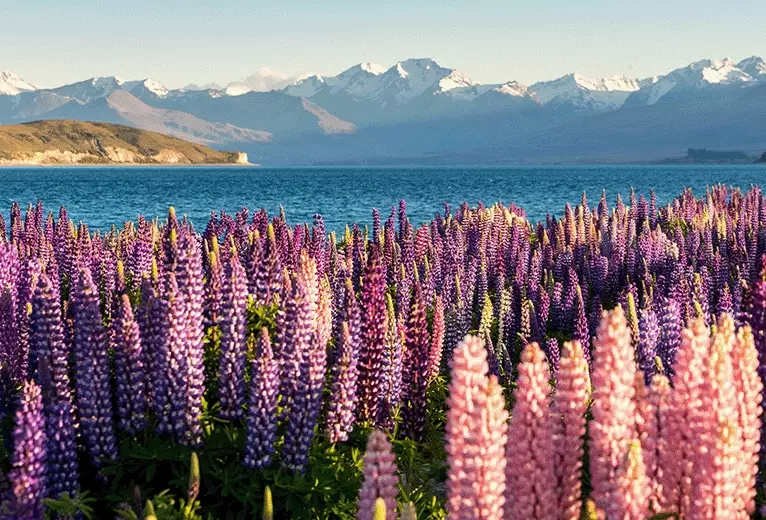
But here's the catch, and something most travel blogs gloss over: They're officially considered an invasive pest plant. Organizations like the Department of Conservation (DOC) actively work to control them because they outcompete native plants. It creates a weird tension. The very flowers that draw thousands of tourists are the ones conservationists are trying to manage. You might see signs asking you not to spread the seeds. It's good to be aware of this duality—you're admiring a beautiful environmental guest that has overstayed its welcome.
The Best Time to Visit for Lupins: It's Not Just "Summer"
If you want the headline answer: mid-November to late December. That's your peak lupin season across most of the South Island. But "summer" is too vague. Bloom times shift significantly based on latitude, altitude, and that year's specific weather.
Think of it as a wave of color moving north to south and from the coast inland. Warmer areas near Christchurch (Canterbury) will kick off first. The cooler, higher areas around Lake Tekapo and Twizel peak a week or two later. By early January, many lowland fields are starting to go to seed (turning brown), while you might still find good patches in sheltered, higher spots.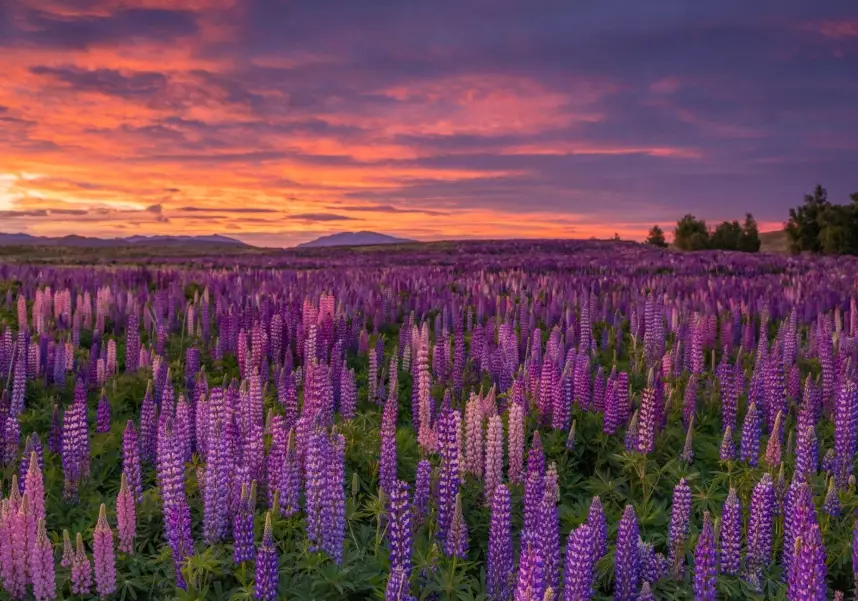
| Region / Area | Peak Bloom Period | What to Expect |
|---|---|---|
| Canterbury Plains (near Christchurch, Ashburton) | Late November – Mid December | Earliest major displays. Often along riverbeds like the Rakaia and Waimakariri. Can be past prime by Christmas. |
| Mackenzie Country (Tekapo, Pukaki, Twizel) | Early December – Late December | The iconic postcard scenes. Peak is usually around mid-December. Higher altitude means a slightly later, condensed season. |
| Central Otago (Queenstown, Wanaka, Cromwell) | Early December – Early January | A longer, more variable season due to microclimates. Good spots can last into the New Year around lake shores. |
| Southland (Around Lake Wakatipu's southern end) | Mid December – Early January | The latest show. If you're traveling in early January, head here for your best chance. |
A huge mistake I see first-timers make? Planning a rigid day-by-day itinerary months in advance and expecting the flowers to comply. You need flexibility. In a warm spring, everything can be 10 days early. A cold, wet November can delay things. Before you finalize your South Island route, check recent photos from the area on social media or travel forums. A local tourism Facebook page for Tekapo or Twizel is worth its weight in gold for last-minute intel.
Where to Find the Best Lupin Fields: A Location Guide
Forget vague directions like "near Lake Tekapo." Let's get specific. The most reliable and photogenic lupin fields are in the Mackenzie Basin, on the eastern side of the Southern Alps. This is your primary hunting ground.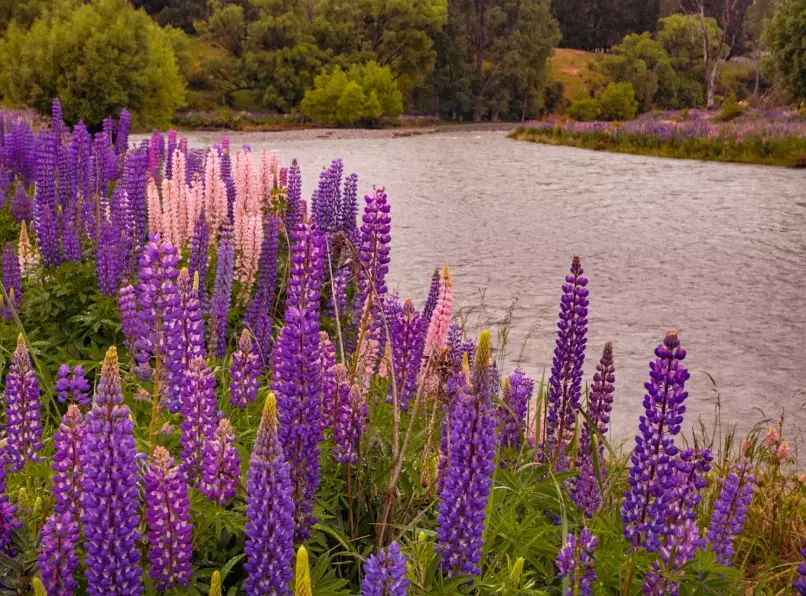
The Mackenzie Country Core Zone
This is ground zero. The combination of turquoise lakes, mountain backdrops, and vast fields is unbeatable.
1. Lake Tekapo Shoreline (North & South Ends)
The most famous spot. Don't just stop at the Church of the Good Shepherd. Drive 5 minutes south along Tekapo-Twizel Road (State Highway 8) and you'll find massive fields between the road and the lake. There's a small pull-off area, but it gets packed. Better to drive a bit further to find your own patch. The northern end of the lake, towards the Mt. John observatory turn-off, also has great, less crowded clusters.
Access: Public land, free. Park safely completely off the highway.
Nearby Stay: Peppers Bluewater Resort (Lake Tekapo) for luxury, or YHA Lake Tekapo for budget. Book months ahead for December.
Eat: Kohan Restaurant for Japanese with a lake view, or Astro Café atop Mt. John for the best coffee with a panorama.
2. Lake Pukaki Shoreline (Along SH8)
The drive along the western shore of Lake Pukaki, between Twizel and the Mt. Cook turn-off, is a lupin wonderland. The contrast of the electric blue lake, the white-capped Alps, and the purple flowers is surreal. There are numerous safe places to pull over.
Pro Tip: The Visitor Centre at the southern end of the lake has great views, but the best, densest fields are a few kilometers north of there. Just drive and explore.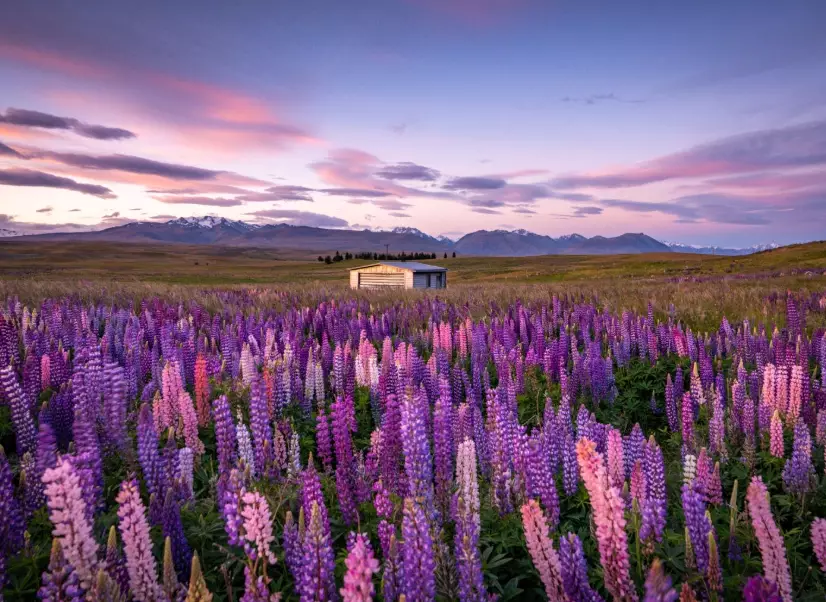
3. Twizel Riverine Area
The town of Twizel is surrounded by canals and riverbeds thick with lupins. Check out the areas along Glen Lyon Road or the network of roads near the Twizel River. It feels more wild and less "curated" than the immediate lake shores.
Other Notable South Island Locations
- The Rakaia Gorge (Canterbury): Massive riverbed fields, often peaking earlier. Great stop if driving from Christchurch to the Mackenzie region.
- Lake Wanaka's Outlet (Clutha River): Scattered but beautiful patches along the river trail, usually good through late December.
- Crown Range Road (between Wanaka & Queenstown): You'll find pockets on the high-altitude slopes, especially on the Wanaka side. Timing is tricky here.
What about the North Island? You'll see some lupins, especially around Lake Taupo and the Volcanic Plateau, but the displays are sporadic and never reach the epic, landscape-defining scale of the South Island. If lupins are your primary goal, focus your time south.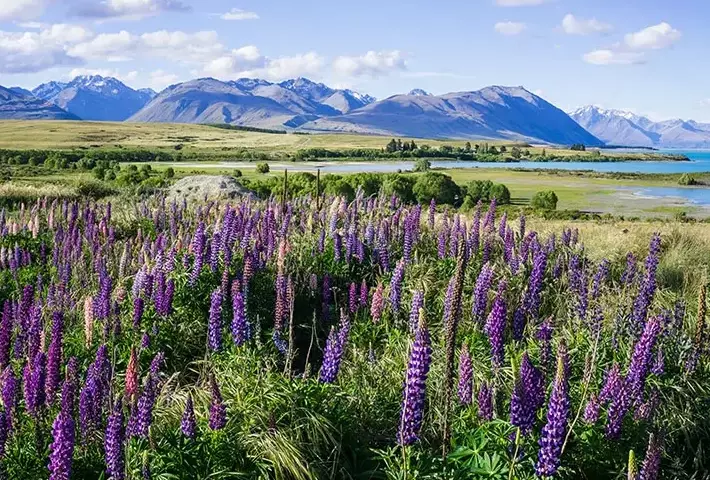
Planning Your Lupin-Focused South Island Trip
Let's build a practical 5-day itinerary focused on maximum flower viewing with sensible driving.
Day 1-2: Christchurch to Lake Tekapo (3-hour drive)
Pick up your car in Christchurch. Don't rush. Stop at the Rakaia Gorge to scout early blooms. Arrive in Tekapo, check into your accommodation. Evening is for photography at the lakeshore fields. Next morning, do the Mt. John walk for aerial views of the lupin patches below.
Day 3: Lake Tekapo to Twizel (via Lake Pukaki, 1.5 hours driving)
This is your big lupin day. Drive south on SH8, stopping constantly along Lake Pukaki. Pack a picnic lunch from the Twizel Market (if it's on) or a local supermarket. Spend the afternoon exploring the riverine fields around Twizel. Overnight in Twizel (more affordable and often more available than Tekapo).
Day 4: Twizel to Wanaka (2.5 hours)
Take the inland route via Omarama and the Lindis Pass. You'll trade lupins for stark, beautiful high-country scenery. Check the shores of Lake Wanaka for late-season blooms. Overnight in Wanaka.
Day 5: Wanaka & Departure
Morning walk along the Clutha River outlet. Depending on your flight, drive to Queenstown Airport (1 hour) or back to Christchurch (5 hours).
Accommodation Booking: This route in peak season (Dec-Feb) books out completely. Secure your rentals or hotels at least 6 months in advance. Consider motels in Fairlie or Geraldine as backup if Tekapo/Twizel are full.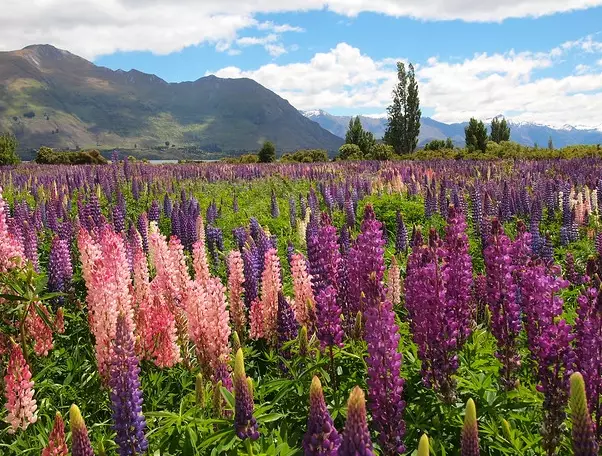
Photography Tips for Stunning Lupin Shots
Everyone has a camera now. To make your photos stand out:
Timing is Everything (Again): The best light is during the golden hours—the hour after sunrise and before sunset. The low sun creates long shadows, warm tones, and makes the colors pop. Midday light is harsh and flat. I made the mistake of shooting at noon on my first day; the photos were bland compared to the ones I took at 8 PM.
Composition: Don't just point at a flower. Use them as a foreground leading to the mountains or lake. Get low to the ground to make a few flowers look like a forest. Include a person for scale to show the vastness of the fields.
Gear: A wide-angle lens (16-35mm) is great for expansive scenes. A telephoto zoom (70-200mm) lets you compress the distance, making flowers and mountains look stacked together. A polarizing filter will cut glare off the lake and make the blues and purples more saturated.
And please, tread lightly. Walk between the clumps, not through the middle of a dense patch. You're not the only one who wants that photo.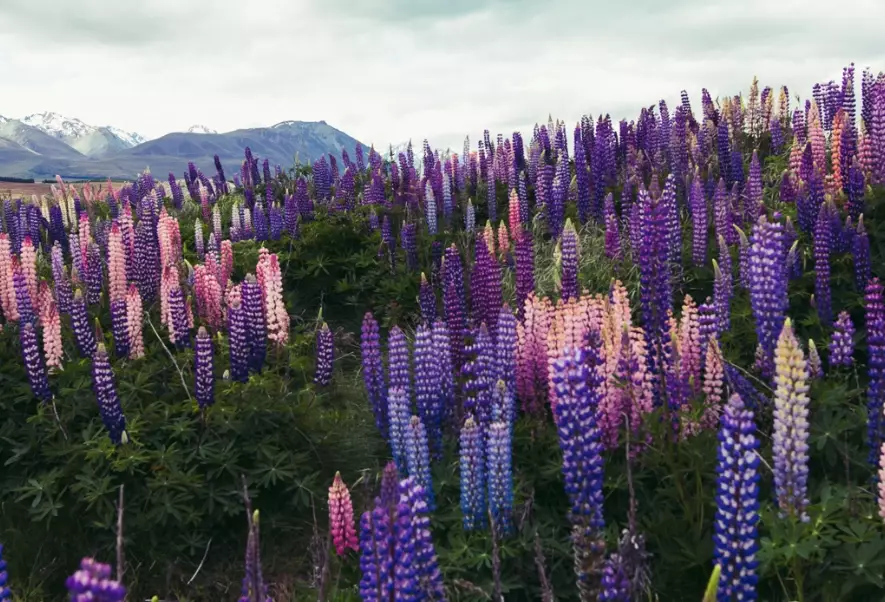
Frequently Asked Questions (The Real Ones)
I can only travel in early January. Is it worth it for lupins?
It's hit or miss, but you can still succeed with a southward strategy. Focus on Central Otago (Wanaka, Queenstown outskirts) and Southland. The fields around Lake Wakatipu near Kingston or the lower ends of the lake often hold color into early January. Temper your expectations—you'll see beautiful patches and seed pods, but likely not the uniform peak blankets of mid-December.
Are there organized lupin tours?
Not really, and that's a good thing. The beauty is in the spontaneous discovery. No tour bus will stop at that perfect, secluded patch you find. The best approach is a self-drive itinerary. Some local photography tour guides in Tekapo or Queenstown might offer seasonal "landscape workshops" that target the lupins—that's your best bet for a guided experience.
Can I pick or transplant lupins?
Absolutely not. It's often illegal (under regional pest management rules) and ecologically irresponsible. Picking encourages more seed spread. The idea of taking a seed pod home is romantic but contributes to the invasive problem in other countries. Enjoy them with your eyes and camera. The Department of Conservation is clear on this: don't spread the plants.
What should I pack specifically for a lupin trip?
Beyond general NZ travel gear: Sturdy, ankle-covering shoes or boots (the fields are often damp, uneven, and can have hidden holes). Insect repellent (sandflies love these wet areas by lakes and rivers). A lightweight tripod for those golden hour and low-light shots. Layers—the Mackenzie Basin can go from warm sun to a chilly, windy afternoon in minutes. And a good offline map (like Maps.me) to find pull-offs without cell service.
The weather forecast looks bad for my dates. Will the flowers be ruined?
Rain and wind are part of the deal. Heavy rain can batter the flowers, and strong wind can flatten fields. But a passing shower can make the colors more vibrant and keep the crowds away. Overcast days provide beautifully even, soft light for photography, perfect for capturing the subtle pinks and blues without harsh shadows. Have a flexible plan B (like visiting the hot pools in Tekapo or Omarama) if a true storm hits.
Planning your trip around New Zealand's lupin season is one of the most rewarding travel experiences you can have. It forces you to understand the rhythms of the landscape, to be flexible, and to seek out beauty in specific places at a specific time. Do your research, book early, build in flexibility, and most importantly, once you're there, take a moment to just stand in those purple fields. Put the camera down for a second. Listen to the bees, smell the earthy scent, and feel the mountain air. That's the memory that will last even longer than the photos.


Comments
Join the discussion