Quick Guide to Your Stay
- The Main Cast: Types of European Accommodation Explained
- How to Actually Book Your European Accommodation (Without Regret)
- A Region-by-Region Reality Check
- Money, Logistics, and Those Annoying Little Details
- Your Burning Questions About European Accommodation (Answered)
- Wrapping It Up: Your Checklist for Success
Let's be honest. Planning where to stay in Europe can feel like trying to solve a puzzle where half the pieces are missing. You've got the glossy photos from booking sites, the rave reviews that sound too good to be true, and the nagging fear that you're about to book a "charming" attic room that's actually a glorified closet with a view of an airshaft. I've been there. I once spent a week in a Rome apartment where the "fully equipped kitchen" consisted of a single hot plate and a sink the size of a cereal bowl. The shower curtain had a permanent, intimate relationship with my legs. Not ideal.
That experience, frustrating as it was, taught me more about navigating European accommodation than any guidebook. It's not just about price or location. It's about understanding the culture of lodging in different countries, decoding the often-misleading terminology, and knowing which trade-offs are worth making. A great place to stay doesn't just give you a bed; it shapes your entire trip, offering a quiet refuge, local insights, and sometimes, unexpected friendships.
This guide is the one I wish I'd had. We're going to strip away the marketing fluff and look at the real pros and cons of every type of stay, from five-star palaces to farmhouse hostels. We'll talk about how to actually book the thing without getting burned, what to expect in different corners of the continent, and how to handle the little hiccups that inevitably pop up. Think of it as a friendly chat with someone who's made the mistakes so you don't have to.
The Main Cast: Types of European Accommodation Explained
Europe's lodging scene is incredibly diverse. A "hotel" in Switzerland is a world apart from a "hotel" in Portugal. Let's break down the major players you'll encounter.
Hotels: The Reliable (Sometimes Boring) Standard
Hotels are the default for many, offering predictability. International chains provide a known quantity—you know the bed will be decent, the WiFi will work, and breakfast will be a buffet of scrambled eggs and cold cuts. But honestly, I find many of them soul-crushingly generic. Why fly across an ocean to stay in a room that looks identical to one in Des Moines?
The magic often lies in smaller, independent hotels or boutique properties. A family-run pensione in Italy, a historic gasthof in Austria, or a design-focused city hotel in Copenhagen can be destinations in themselves. The service tends to be more personal, the decor has character, and you might get a recommendation for a trattoria that isn't in any app. The downside? Consistency can be a gamble. That "historic charm" might mean creaky floorboards and a tiny elevator—or no elevator at all, a fact you'll deeply contemplate while hauling a 50-pound suitcase up four flights of marble stairs.
Bed & Breakfasts (B&Bs) and Guesthouses
This is where European accommodation truly shines for me. A B&B is usually a room in someone's home, often a house with character. Breakfast is almost always included and is frequently a homemade, local affair—think fresh bread, jams, cheeses, and strong coffee. It's a fantastic way to meet the hosts and get genuine, non-commercial advice.
Guesthouses are a slight step more formal, sometimes small-scale commercial operations with a handful of rooms. Privacy levels vary. You might have your own entrance, or you might be walking through the family's living room. Always check the description for terms like "private bathroom" versus "shared bathroom." Sharing a bathroom down the hall can be a fun, hostel-like experience or a major inconvenience at 7 a.m., depending on your outlook and bladder.
Vacation Rentals & Apartments
Powered by platforms like Airbnb and Vrbo, renting an entire apartment or house has exploded in popularity. The appeal is massive: space, a kitchen to save money on meals, laundry facilities, and the feeling of "living" somewhere. For families or groups, it's often a no-brainer, both financially and logistically.
But.
There's a significant backlash in many European cities. Amsterdam, Barcelona, Berlin, and Paris have implemented strict regulations to curb the negative impact on local housing markets. Always ensure your rental is legal and licensed. I've heard too many horror stories of travelers showing up to find their booking canceled last minute because it was an illegal listing. Also, remember you're in a residential building. Noise rules are strict, and taking out the trash is now your job. Don't be the tourist who gets yelled at by a neighbor for loud luggage wheels at midnight.
Hostels: Not Just for Backpackers Anymore
Throw out any outdated images of grungy, unsafe dorms. The modern European hostel is often a revelation. Yes, you can still find the classic 12-bed dorm for rock-bottom prices, but many now offer pristine private rooms with en-suite bathrooms that rival budget hotels. The real value is in the communal spaces: kitchens, bars, game rooms, and organized tours. If you're traveling solo and want to meet people, this is your best bet by a mile.
Many hostels now cater to digital nomads and older travelers, with co-working spaces and quieter atmospheres. Always read reviews carefully to gauge the social vibe. Some are party central; others are chill and focused on cultural exchange. Websites like Hostelworld are invaluable for filtering by vibe and reading recent feedback.
The Unique & Quirky
This is the fun part of European accommodation research. Why stay in a standard room when you can sleep in a converted castle, a vineyard's farmhouse, a monastery, a lighthouse, or even a treehouse? Slovenia offers haylofts (kozolec) on farms. You can stay in a parador in Spain—historic buildings like castles and monasteries run by the state. Ireland is dotted with charming thatched-roof cottages.
These options are memorable but come with quirks. Remote locations often require a car. Historic buildings rarely have modern soundproofing or elevator access. The WiFi in a 15th-century castle turret might be, let's say, whimsical. It's a trade-off for an unforgettable experience.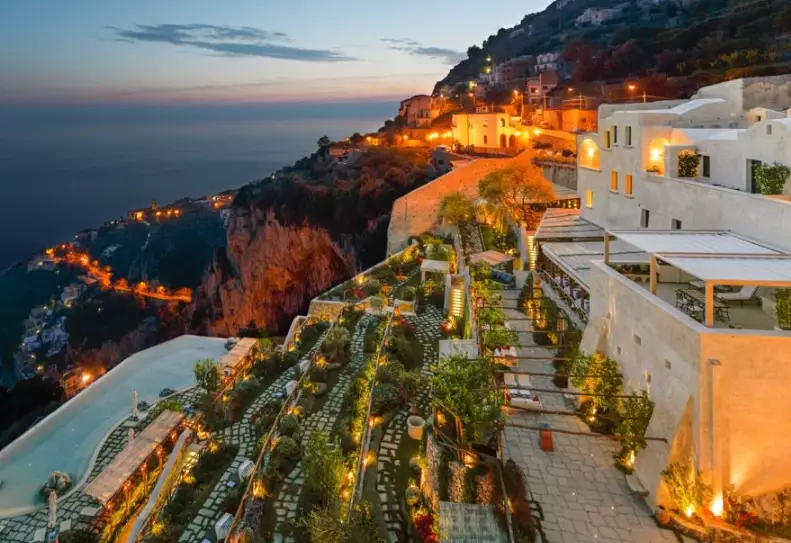
| Type of Accommodation | Best For... | Potential Downsides | Price Range (Per Night) |
|---|---|---|---|
| Luxury/Boutique Hotel | Splurging, special occasions, prime locations, concierge service. | Can be very expensive; may lack local character if it's an int'l chain. | €200 - €1000+ |
| Mid-Range Hotel/B&B | Balancing comfort, location & budget; reliable amenities. | Rooms can be small; breakfast may be basic; can book out fast. | €80 - €200 |
| Vacation Rental (Entire Place) | Families/groups, longer stays, self-catering, more space. | Less daily service; cleaning fees; legal/neighbor issues in some cities. | €70 - €300+ (varies hugely) |
| Private Room in Hostel | Solo travelers, social atmosphere, good value, central locations. | Can be noisy; shared facilities; may lack privacy in common areas. | €40 - €120 |
| Dorm Bed in Hostel | Extreme budget travel, meeting people, flexible plans. | Zero privacy, noise, security concerns for belongings, shared bathrooms. | €15 - €50 |
| Agriturismo / Farm Stay | Rural immersion, local food, peace & quiet, families. | Often requires a car; remote; amenities can be simple. | €60 - €180 |
How to Actually Book Your European Accommodation (Without Regret)
Finding the place is one thing. Successfully booking it is another. The process has its own pitfalls.
Platform Wars: Booking.com, Airbnb, Direct, and Others
Most people start on the aggregators. Booking.com is the giant for hotels, B&Bs, and some apartments. Its filters are excellent, and the "Genius" loyalty program can yield real discounts. Airbnb dominates the vacation rental and private room market. Then there are specialists: Hostelworld for hostels, Vrbo for family-oriented whole-home rentals.
Here's my controversial take: always check the property's own website before booking on a third-party platform. Why? Sometimes the direct rate is cheaper, or it includes breakfast where the platform rate doesn't. More importantly, if something goes wrong—a double booking, a need to change dates—dealing directly with the property is almost always faster and more effective than going through a platform's often-slow customer service. I once got a free room upgrade just for asking politely on a direct booking. That never happens via a faceless portal.
The Art of Reading Reviews (Properly)
Everyone says read reviews, but few do it strategically. Don't just look at the average score.
- Filter by language and recency: A review from two years ago is irrelevant if management changed last month. Recent reviews in your language (or one you trust via translation) are gold.
- Look for patterns: If one person complains about noise, it might be bad luck. If twenty people over six months complain about street noise, believe them. The same goes for praise about a host's hospitality or the amazing breakfast.
- Ignore the extremes: The 1-star "everything was terrible" and the 5-star "PERFECT!!" reviews are often emotional outliers. Focus on the detailed 3 and 4-star reviews. They usually give a balanced, realistic picture of the pros and cons.
- Check the reviewer's profile: A profile with multiple, detailed reviews across different countries is more credible than a blank profile with a single rant.
Cracking the Location Code
"Central" is a meaningless word. A place can be central but in a dull business district that's dead at night, or on a noisy square above a bar that goes until 4 a.m. Use Google Maps Street View relentlessly. What's the building next door? Is it a construction site? A quiet park? A major bus terminal?
Research neighborhoods. In Paris, the 5th (Latin Quarter) feels totally different from the 1st (Louvre) or the 18th (Montmartre). In Berlin, staying in Mitte is not the same as staying in Kreuzberg. A 10-minute metro ride from a lively, authentic neighborhood is often better than being in the sterile, tourist-saturated epicenter. Consider proximity to a specific metro or tram line, not just "distance to city center."
A Region-by-Region Reality Check
Expectations need to shift as you move across the continent. Your perfect European accommodation in one country might be a poor fit in another.
Western Europe (France, Benelux, UK, Germany)
Standards are generally high, but so are prices, especially in major cities like Paris, London, and Amsterdam. Space is at a premium—rooms and bathrooms can be shockingly small by North American or Australian standards. Don't expect a queen bed as standard; twins pushed together are common. Breakfast is often an extra (and expensive) add-on in hotels. Self-catering or finding a B&B with included breakfast is a smart money-saver here.
Southern Europe (Italy, Spain, Portugal, Greece)
Here, the line between a hotel, B&B (pensione, casa rural), and rental apartment can blur wonderfully. Family-run operations are the heart of the industry. Hospitality is warm, but service can be more relaxed (don't expect 24-hour reception everywhere). In coastal areas and islands, many accommodations are seasonal. A "sea view" might mean a sliver of blue between two buildings—check the photos. In historic city centers (like Rome's Trastevere or Lisbon's Alfama), be prepared for stairs, narrow streets, and potential noise from lively squares.
Northern Europe (Scandinavia, Baltics)
Scandinavia is expensive, full stop. Even hostels can cost what a mid-range hotel does elsewhere. The flip side is impeccable design, cleanliness, and functionality. It's common to find well-equipped shared kitchens even in hotels. In the Baltics (Estonia, Latvia, Lithuania), you get incredible value—beautiful boutique hotels and apartments in historic centers for a fraction of Western European prices. Saunas are a frequent and glorious amenity.
Eastern & Central Europe (Poland, Czechia, Hungary, Balkans)
This is where your money goes the furthest. You can often afford a much higher standard of European accommodation here. Grand, historic hotels that would cost a fortune in Vienna are affordable in Prague or Budapest. The emerging scene of design hostels and boutique apartments is fantastic. In more rural or coastal areas of the Balkans, you'll find incredible family-run guesthouses (sobe in Croatia) offering simple rooms and phenomenal hospitality for very little money. Just be aware that amenities like air conditioning or powerful showers might not be universal in older buildings.
Money, Logistics, and Those Annoying Little Details
This is the boring but critical stuff that ruins trips if ignored.
Understanding the Real Price
The advertised rate is rarely the final price. You must account for:
- City/Tourist Tax: Many European cities charge a per-person, per-night tax (€1-€7). It's often payable in cash on arrival or at checkout and is rarely included in the online price.
- Cleaning Fees (for rentals): Can sometimes be 25-50% of the nightly rate itself, making short stays poor value.
- Breakfast: Is it included? If not, factor in €10-€25 per person per day.
- Parking: In cities, it can cost €20-€50 per night. Does the property have it? Is it reserved? Is it secure?
Cancellation Policies: Read the Fine Print
This is non-negotiable. Policies range from "free cancellation until the day before" to "non-refundable, no changes." The cheaper rate almost always comes with stricter terms. Only book non-refundable rates if you are 110% certain of your plans. For complex trips, pay the extra for flexibility. The peace of mind is worth it. Official resources like the European Commission's consumer site outline your basic rights, but individual property policies are king.
Checking In & Out Times
European check-in times can be later than you're used to (often 3 p.m. or 4 p.m.), and checkout is often brutally early (10 a.m. or 11 a.m.). This is not a suggestion. Plan accordingly. Most properties will let you store luggage before or after, but always confirm in advance. If you have a very early arrival or late departure, communicate directly with the property to see if early check-in/late checkout is possible (sometimes for a fee).
Your Burning Questions About European Accommodation (Answered)
Wrapping It Up: Your Checklist for Success
Finding great European accommodation isn't about luck. It's about informed choices. Before you click "book," run through this mental list:
- Purpose Match: Does this place suit my trip's goal (relaxation, sightseeing, socializing)?
- Location Verified: Have I checked the neighborhood and transport links on a real map, not just trust the listing's "central" tag?
- Total Cost Calculated: Have I added taxes, fees, and breakfast to get the real nightly rate?
- Reviews Pattern-Scanned: Have I read enough recent, mid-range reviews to see consistent pros and cons?
- Policy Understood: Do I know the cancellation rules, check-in times, and what amenities are/aren't included (WiFi, AC, towels)?
- Direct Check Done: Have I quickly looked at the property's own website or social media for a better deal or more info?
Europe is a continent best experienced from a home base that makes you happy. Whether that's a sleek city-center pod, a rustic farmhouse table laden with homemade cheese, or a hostel common room buzzing with stories from around the world, your choice of shelter is a huge part of the adventure. Do your homework, manage your expectations, and don't be afraid to try something different. The perfect European accommodation for you is out there—it just might not look exactly like you first imagined.





Comments
Join the discussion