You're planning your European adventure, budget in mind, ready to book a hostel. Then the doubt hits. Am I too old for this? Is there a hostel age limit in Europe that will turn me away at the door? I remember this anxiety before a trip to Berlin in my late 20s. The truth is, the landscape has changed dramatically. While "youth hostel" once implied an age cap, today's European hostel scene is vastly more inclusive, yet understanding the nuances is key to a smooth trip.
Let's cut through the confusion. This guide isn't about vague theories; it's about the concrete policies, the unwritten rules, and how to find the perfect place to stay, whether you're 18 or 68.
What's Inside?
- The Real Story on European Hostel Age Limits
- Country-by-Country Policy Breakdown
- How to Check a Hostel's Age Policy (Before You Book)
- Why Do Some Hostels Have Age Limits?
- The Smart Guide for Travelers Over 30, 40, and 50+
- Your Questions, Answered
The Real Story on European Hostel Age Limits
First, a crucial distinction. The term "youth hostel" often refers to hostels affiliated with large networks, historically with age limits. The broader term "hostel" encompasses everything from classic backpacker dorms to boutique design hostels, most of which have no upper age limit.
The main network you'll encounter is Hostelling International (HI). Historically, HI hostels had an upper age limit, often around 26 or 30. This is largely outdated. According to HI's own global policy, there is no universal upper age limit. However, individual hostels or national associations within the HI network may set their own policies. It's the exception, not the rule, but it still exists in some places.
The more common age restriction is a lower limit. Many hostels, especially party hostels, require guests to be 18 or older. Some may allow younger travelers with a guardian. This is almost always stated clearly during booking.
Country-by-Country Policy Breakdown
Let's get specific. Policies can vary, so here’s a snapshot of what you might find in popular destinations. Remember, this is a general guide—always verify with your chosen hostel.
| Country | Typical Policy Landscape | Notes & Examples |
|---|---|---|
| Germany | Very relaxed. Most hostels, including many HI hostels, have no upper age limit. | The German Youth Hostel Association (DJH) states guests of all ages are welcome, though those over 27 pay a slightly higher fee. A perfect example of a network adapting. |
| United Kingdom | Mixed. Independent hostels are open to all. Some YHA (Youth Hostels Association) England & Wales properties may have restrictions on those over 30 in shared dorms during peak times, but this is increasingly rare. | Always check the specific YHA property page. In cities like London and Edinburgh, the vast majority of hostels have no upper limit. |
| France | Generally open. The French HI network (FUAJ) welcomes all ages. | Paris hostels are used to an international crowd of all ages. The concept of an age limit feels very foreign here. |
| Spain & Portugal | Extremely rare to find any upper age limit. The focus is on the vibe. | In cities like Barcelona, Lisbon, and Madrid, your choice is more about avoiding "party hostels" if you want a quiet night, not about being allowed in. |
| Italy | Similar to Spain. Age is not a primary factor for booking. | Hostels in Rome, Florence, and Venice cater heavily to an international tourist mix, from students to families. |
| Eastern Europe (Prague, Budapest, Krakow) | Almost no upper age limits. The lower limit (18+) is strictly enforced in famous party hostels. | These cities are hostel hubs. You'll find everything from cheap bunk beds to upscale boutique hostels, all generally age-open. |
See a pattern? The restrictive policies are fading. A hostel manager in Amsterdam once told me, "We care more about you being a respectful guest than your birth year. A rude 22-year-old is more trouble than a friendly 52-year-old."
How to Check a Hostel's Age Policy (Before You Book)
Don't guess. A two-minute check saves potential hassle at check-in. Here's your action plan.
1. Scour the "House Rules" or "Policies" Section
On booking sites like Hostelworld or Booking.com, and on the hostel's own website, there's always a house rules section. Look for terms like "age restriction," "minimum age," or "suitable for." If it says "18+ only," that's your answer. If it mentions nothing about a maximum age, you're almost certainly fine.
2. Read Recent Reviews Strategically
This is the goldmine. On Hostelworld, use the filter to read reviews from "Mature Travellers" or "Families." You'll get firsthand accounts like, "I'm 45 and felt completely welcome," or "Great spot for older solo travelers." Conversely, if you see reviews complaining about all-night parties, you can decide if that's your scene regardless of age.
3. When in Doubt, Send a Direct Email
It's old-school but effective. A quick email to the hostel: "Hello, I'm [Your Age] traveling to [City] and very interested in your hostel. Do you have any age restrictions for guests?" Their response is the final word.
Why Do Some Hostels Have Age Limits?
Understanding the "why" helps you navigate. It's rarely about discrimination.
Lower Limits (18+): Primarily for liability and atmosphere. Hostels don't want the responsibility of unaccompanied minors. Party hostels enforce this strictly to maintain an adult-oriented environment.
Upper Limits (The Dying Breed): These usually stem from two things. First, historical network rules from when hostels were subsidized for youth travel. Second, a misguided attempt to curate a "young" atmosphere. Most modern hostels realize this is bad business and excludes a huge market of fantastic travelers.
The hostels that keep upper limits are often the ones clinging to a very specific, often rowdy, party identity. If you're over 30, you probably don't want to stay there anyway.
The Smart Guide for Travelers Over 30, 40, and 50+
Okay, so you're allowed in. But how do you pick a hostel where you'll actually feel comfortable? Here's the insider advice.
Forget "Youth Hostel." Think "Boutique," "Design," or "Social Hostel." These are the keywords that signal a focus on style, comfort, and quality social spaces over just the cheapest bed. They attract a mixed-age crowd interested in culture and connection.
Prioritize Private Rooms. This is a game-changer. Many hostels offer affordable private rooms, sometimes with en-suite bathrooms. You get the social benefits of a hostel (common kitchen, lounge, events) with the privacy and quiet of a hotel room. I did this in Vienna and had the best of both worlds.
Look for Hostels with Organized, Non-Party Activities. Free walking tours, family-style dinners, pub quizzes, or day trips attract a more diverse and often slightly older crowd than just a nightly bar crawl.
Avoid the Obvious Party Hostels. How do you spot them? Descriptions heavy on "pub crawls," "shot bars," and "24/7 party." Reviews mentioning noise all night, broken sleep, and lots of very drunk 19-year-olds. These hostels can be fun for some, but they are not about age—they're about a specific, intense vibe.
Consider smaller guesthouses (Pensions) or budget hotels. In some Eastern European cities, the price difference between a private room in a nice guesthouse and a private room in a hostel is minimal. You trade the big common room for more guaranteed peace.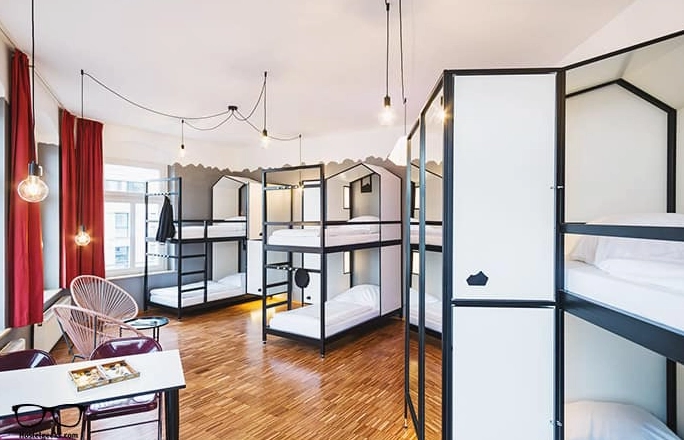
Your Questions, Answered
Is there a maximum age limit for hostels in Europe?
Most independent hostels in Europe do not have an upper age limit. The concept is primarily tied to specific networks like Hostelling International (HI), and even there, policies have largely relaxed. Always check the specific hostel's website or contact them directly to be 100% sure, but for the vast majority, your age is not a barrier.
What ID or proof do I need to book a youth hostel in Europe?
You'll need a government-issued photo ID (passport, driver's license) for check-in at any hotel or hostel in Europe. For hostels with an 18+ lower limit, this is how they verify age. For hostels that are part of the HI network, you may need an HI membership card to get the member rate, though you can often buy a membership on the spot. Carry both your passport and any membership card.
Can I stay in a European hostel with my family if I'm over 40?
Yes, and it's a fantastic, budget-friendly option. The key is selecting the right hostel. Look for ones that explicitly offer private family rooms (often with 3-4 beds and a private bathroom). Read reviews filtered for "Families." Avoid party hostels. Many modern hostels are incredibly family-friendly, with games, safe environments, and kitchens where you can prepare simple meals.
What are the best alternatives if I feel too old for a traditional youth hostel?
If the dormitory life doesn't appeal to you, you have great options that still save money. Boutique hostels with private rooms are my top pick. Guesthouses (Pensions) and budget hotels offer more traditional privacy. For stays longer than a few nights, a serviced apartment or a private room via Airbnb can offer better value with kitchen access. Don't rule out hostels completely, though—just shift your search to their private room offerings.
The bottom line is simple. The European hostel scene has matured. It's less about "youth" and more about community, value, and experience. Age limits, where they persist, are becoming relics. Your focus should be on matching a hostel's atmosphere to your travel style, not your date of birth. Do your research, read between the lines of reviews, and don't be afraid to book that bed. Some of my most interesting travel conversations have been in hostel common rooms with people decades older and younger than me. That's the real magic it offers, and it's open to you.





Comments
Join the discussion