Let's cut to the chase. Yes, $2000 for two weeks in Europe is possible. But it's not a luxury vacation. It's a carefully calculated, budget-conscious adventure where you trade five-star hotels for hostels and fine dining for market stalls and supermarket picnics. The real answer depends entirely on where you go and how you travel. I've done trips on less and trips on more, and the difference often comes down to a few key choices.
What's Inside This Guide?
- How to Break Down Your $2000 Europe Budget?
- Western Europe vs. Eastern Europe: The Cost Chasm
- How to Save Big on Accommodation
- Getting Around Without Going Broke
- How Can You Save Money on Food and Drinks?
- Two $2000 Itineraries: A Tale of Two Budgets
- Budget-Killing Mistakes to Avoid
- Your Europe Budget Questions, Answered
How to Break Down Your $2000 Europe Budget?
Think of your $2000 as 14 daily allowances. That's about $143 per day. Sounds okay, right? But that daily amount has to cover everything: a place to sleep, all your meals, getting between cities, local buses and metros, museum entry, a coffee, a beer—everything. Let's allocate it realistically.
This is a working model for a mid-range budget traveler, not a luxury seeker or an extreme shoestring backpacker.
Accommodation: This is your biggest fixed cost. Even a cheap private room in a hostel or a budget hotel in a major Western European city can run €60-80 ($65-87). A dorm bed is cheaper, around €25-40 ($27-44). Let's budget a cautious average of $50 per night. For 14 nights, that's $700 gone. Half your budget, just on a place to lay your head.
Food & Drinks: You can't live on tap water. A basic restaurant meal in Paris or London is €15-25. A coffee is €3-4. A beer in a bar is €5-7. If you eat out for every meal, you'll blow $50+ a day on food alone. The trick is mixing it up. Budget $30 per day ($420 total) by having a supermarket breakfast, a cheap lunch (kebab, pizza slice), and cooking one meal at your hostel or choosing a modest restaurant for dinner.
Intercity Transport: This is the wild card. A last-minute high-speed train from Paris to Amsterdam can cost €150. A budget flight booked months ahead might be €30. A bus could be €20. You need to plan this. For moving between, say, 4 cities in two weeks, set aside $250-$350.
Local Transport & Activities: Metro day passes, bus tickets to that out-of-town castle, museum entry fees. The Louvre is €17. The Sagrada Familia starts at €26. It adds up fast. Budget $15-$25 per day ($210-$350 total) for this category.
Do the quick math: $700 (accommodation) + $420 (food) + $300 (transport between cities) + $280 (activities/local transport) = $1700. That leaves a $300 buffer for emergencies, souvenirs, or the occasional splurge. It's tight, but the framework exists.
Western Europe vs. Eastern Europe: The Cost Chasm
This is the most important factor. "Europe" isn't one price point. The difference between Switzerland and Bulgaria is like the difference between dining at a Michelin-star restaurant and a food truck—both can be great, but the cost structure is worlds apart.
| Expense Category | Western Europe (e.g., France, Germany, Benelux, Italy) | Eastern Europe (e.g., Czechia, Poland, Hungary, Balkans) |
|---|---|---|
| Hostel Dorm Bed | €25 - €45 per night | €10 - €20 per night |
| Budget Private Room | €60 - €100+ per night | €25 - €50 per night |
| Restaurant Meal (Main) | €15 - €30 | €5 - €12 |
| Local Beer (Pub) | €5 - €7 | €1.50 - €3 |
| City Metro Ticket | €2 - €3 per ride | €0.80 - €1.50 per ride |
| Major Museum Entry | €15 - €25 | €5 - €10 |
See the difference? Your $2000 stretches dramatically further east of Vienna. In Prague, you can have a fantastic dinner with beer for under $10. In Amsterdam, that might just buy you the beer. A common mistake is trying to fit expensive Western capitals like London, Paris, and Rome into a tight budget. You'll spend most of your time stressing over costs. For a truly comfortable $2000 two-week trip, Eastern Europe is your sweet spot. For Western Europe, you need to be a savvy planner.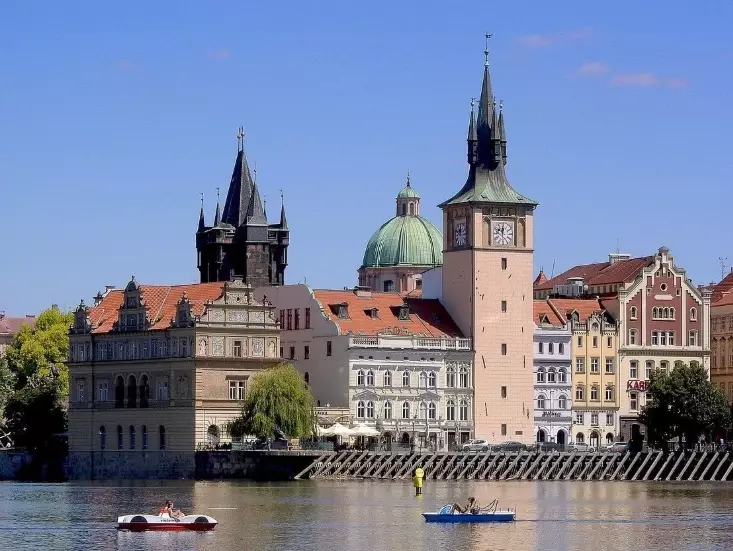
How to Save Big on Accommodation
Since lodging eats half your budget, optimizing here is crucial. It's not just about picking the cheapest bunk.
Hostels Aren't Just for 20-Year-Olds
Modern hostels often have private rooms with en-suite bathrooms. They're cleaner and more social than many budget hotels. Use sites like Hostelworld and read reviews carefully. Look for hostels with kitchens—this is a non-negotiable money-saver.
Consider Alternative Stays
Guesthouses (pensions) in smaller towns or on the outskirts of cities can offer better value. Booking.com's map feature is great for finding these. For longer stays (3+ nights in one city), a budget Airbnb or Vrbo apartment can work out cheaper per person than two hostel beds, especially if you're a couple or small group, as you can cook.
Location vs. Cost Trade-Off
A hostel 20 minutes by metro from the city center might be €10/night cheaper than one in the center. Do the math: is the savings worth the extra time and daily transport cost? Sometimes it is, sometimes it isn't.
Getting Around Without Going Broke
Transport is where budgets silently hemorrhage. Here's the expert take nobody tells you: rail passes are often not the best value.
Everyone romanticizes the Eurail pass. For a rigid, fast-paced itinerary covering huge distances, they can be great. But for most people, mixing and matching is cheaper. Budget airlines like Ryanair and Wizz Air have insane deals if you book early and travel with carry-on only. A €20 flight beats a €120 train ride any day. Always check Google Flights (set to "flexible dates") and Omio for bus/train comparisons.
For regional travel, buses (FlixBus, RegioJet) are almost always the cheapest, often surprisingly comfortable with WiFi. For trains, booking point-to-point tickets directly with the national railway (like Deutsche Bahn for Germany, SNCF for France) 2-3 months in advance yields the best "Saver" fares.
How Can You Save Money on Food and Drinks?
You don't have to survive on ramen. European food culture is a highlight, and you can experience it cheaply.
Embrace the Market and Supermarket: Start your day with yogurt, fruit, and pastries from a local bakery or supermarket. Pack a lunch of cheese, bread, and cured meat for a picnic in a park. It's not just cheaper; it's an authentic experience.
Lunch is the New Dinner: Many restaurants offer fixed-price "menu del día" or "plat du jour" at lunch that are significantly cheaper than the evening à la carte menu. Have your big, sit-down meal at lunch, and a lighter, self-catered dinner.
Street Food is King: Don't underestimate a proper kebab in Berlin, a slice of pizza al taglio in Rome, or a trdelník in Prague. They're delicious, filling, and cost a fraction of a restaurant meal.
The Water Bottle Trick: Carry a reusable bottle. Tap water is safe to drink in most of Europe, and you'll save €3 every time you avoid buying bottled water. Ask for "tap water" in restaurants—in some places they'll give it for free, in others they might frown, but it's worth asking.
Two $2000 Itineraries: A Tale of Two Budgets
Itinerary 1: The Western Europe Challenge (Tight but Doable)
Route: Berlin (4 nights) → Prague (4 nights) → Vienna (3 nights) → Budapest (3 nights). This classic route moves from a pricier Western capital to increasingly affordable Eastern gems.
Budget Snapshot: Accommodation: $50/night avg = $700 Food: $30/day = $420 Intercity Transport: Berlin-Prague (bus €20), Prague-Vienna (bus €15), Vienna-Budapest (train €20) = ~$60 Activities/Local: $25/day = $350 Total: ~$1530. The $470 buffer allows for a nicer private room sometimes, a few splurge meals, and entry to all the major sites.
Itinerary 2: The Eastern Europe Comfort Zone (More Relaxed)
Route: Krakow (3 nights) → Budapest (4 nights) → Belgrade (3 nights) → Sarajevo (4 nights). Deep dive into Central/Eastern Europe.
Budget Snapshot: Accommodation: Avg $30/night for privates = $420 Food: $25/day (you can eat very well) = $350 Intercity Transport: Buses between these cities, avg €25 per leg = ~$120 Activities/Local: $20/day = $280 Total: ~$1170. With a $830 buffer, you could upgrade your entire trip, take a guided tour, or extend your stay. This is where $2000 feels comfortable.
Budget-Killing Mistakes to Avoid
I've seen these blow budgets time and again.
Paying Foreign Transaction Fees: Use a credit card with no foreign transaction fees (like many from Chase or Capital One). Always pay in the local currency, never let the machine convert to USD (Dynamic Currency Conversion) — it's a rip-off.
Overpaying for Mobile Data: Get a local EU SIM card (like from Vodafone or Orange) for €20-30 with tons of data. EU roaming laws mean it works across borders. It's infinitely cheaper than your home carrier's international plan.
Not Booking Major Attractions Online: Booking online for the Eiffel Tower, the Vatican, Anne Frank House, etc., often saves money, guarantees a time slot, and lets you skip the massive ticket line. That's time and money saved.
Underestimating City Tourism Taxes: Many cities (Venice, Barcelona, Berlin) charge a small per-night tourist tax (€1-5) not always included in the online booking price. Have some cash for this at check-in.
Your Europe Budget Questions, Answered
Can I realistically visit both Western and Eastern Europe on a $2000 budget for two weeks?
You can, but it will be tight and require strict budgeting. The flight between regions adds cost. A more relaxed approach is to focus on one region. For $2000, you'll have a much richer experience exploring multiple cities in Eastern Europe or carefully selecting 2-3 destinations in Western Europe with budget transport links (like Berlin-Prague-Vienna). Trying to cram London, Paris, Rome, and Budapest into two weeks on this budget will leave you exhausted and constantly counting pennies.
Does the $2000 budget include round-trip airfare from North America?
Typically, no. The $2000 figure discussed here is generally for expenses on the ground in Europe (accommodation, food, local transport, activities). Round-trip flights from the US or Canada to Europe can range from $500 to $1200+ depending on the season, airline, and how far in advance you book. You need to factor this into your total trip cost. A good strategy is to set a separate flight budget and use tools like Google Flights to track prices.
What's the single easiest way to blow my $2000 budget in Europe?
Unplanned intra-Europe flights and last-minute train tickets. A spontaneous €150 flight between cities seems convenient but instantly consumes a huge chunk of your daily allowance. Similarly, buying a high-speed train ticket the day of travel can cost triple the price booked a month ahead. Lock in your major city-to-city transport early. The flexibility you sacrifice is worth the hundreds of dollars you'll save.
Is a $2000 budget for two weeks feasible for a family or just solo travelers?
This budget is primarily geared towards solo travelers or couples who can split some costs like private rooms. For a family, $2000 for two weeks becomes extremely challenging. Family-sized accommodations are disproportionately more expensive, and multiplying every museum ticket, meal, and transport pass by 3 or 4 quickly makes the budget unrealistic. Families should consider increasing the budget significantly, focusing on destinations with great free attractions (like many cities in the UK), or shortening the trip duration.
So, is $2000 enough? It's a solid budget for a single traveler or a couple willing to embrace hostels, buses, and self-catering. It's a tight but achievable budget for Western Europe if you plan meticulously. It's a very comfortable budget for Eastern Europe. The key is aligning your destination choices with your financial reality. With the strategies above, your European adventure is absolutely within reach.




Comments
Join the discussion